
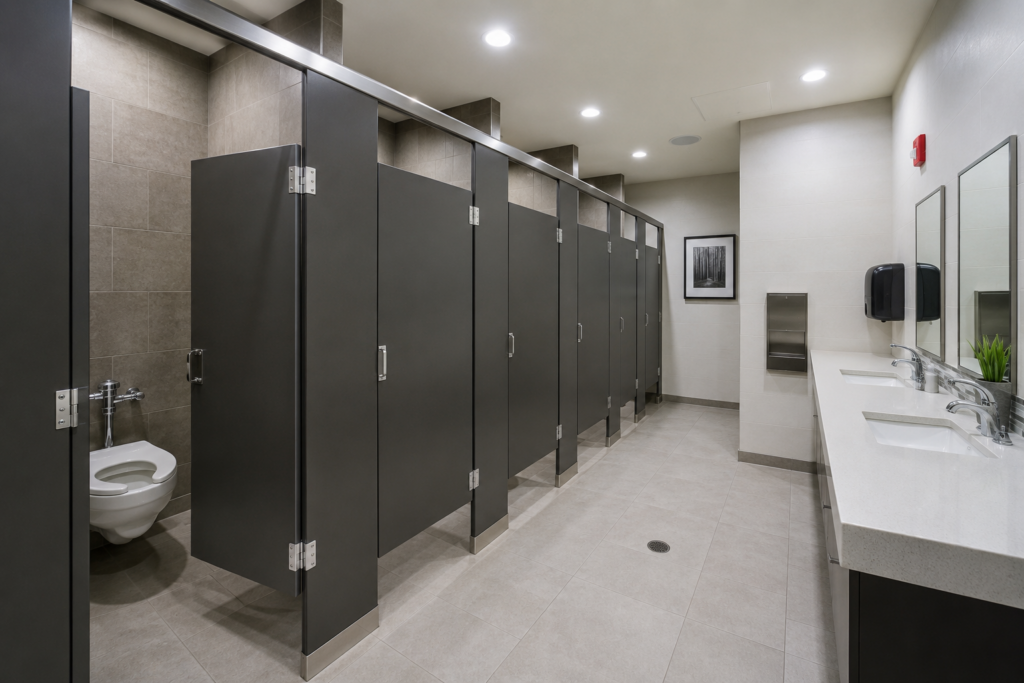
A restroom is the single most scrutinized space in any commercial building. Visitors, employees, students, and patients judge the cleanliness of an entire facility based on thirty seconds in a stall, and nothing tanks that judgment faster than a lingering odor. Getting commercial restroom odor control right at the source matters more than any single product on the shelf.
Kansas City summers make the problem worse. Heat and humidity accelerate bacterial growth in drains, grout lines, and floor surfaces, which means the restroom odor complaints that trickle in during July and August are often a symptom of a deeper maintenance gap rather than a one time bad day.
Here is what actually causes commercial restroom odor, the fixes that work at the source instead of masking the problem, and the product categories worth stocking before the next complaint comes in.
Why Air Freshener Alone Rarely Solves the Problem
The most common restroom odor response is also the least effective long term. Spraying air freshener over a lingering smell covers the symptom for a few minutes while the source, whether that is a dry floor drain trap, urine residue in grout, or a biofilm buildup in a drain line, keeps producing odor around the clock.
A real odor control program identifies the source first, treats it directly, and uses air freshening and odor counteractant systems as a supporting layer rather than the entire strategy.
Common Causes of Commercial Restroom Odor
Dry Floor Drain Traps
Floor drains rely on a water seal in the trap to block sewer gas from entering the restroom. In low use restrooms, or during periods when a building sits partially empty, that water evaporates and the trap runs dry, letting sewer gas rise directly into the room. This is one of the most common and most overlooked sources of persistent restroom odor.
The fix: Pour water down floor drains on a regular schedule, particularly in low traffic restrooms, or install a trap primer that automatically maintains the water seal.
Urine Residue in Grout and at Fixture Bases
Porous grout lines and the base of urinals and toilets absorb urine over time, and standard daily cleaning often does not penetrate deep enough to fully remove it. The result is a persistent ammonia odor that gets worse with heat and humidity.
The fix: Use an enzymatic or bio based cleaner specifically formulated to break down uric acid at the source, applied on a scheduled deep clean rather than relying on daily surface cleaning alone.
Biofilm Buildup in Drain Lines
Soap scum, organic material, and mineral deposits build up inside drain lines over time, creating a biofilm that produces a persistent musty or sour odor that seems to come from nowhere obvious.
The fix: Regular drain line treatment with an enzymatic drain maintainer breaks down biofilm before it accumulates enough to cause noticeable odor.
Inadequate Ventilation
Exhaust fans that are undersized, poorly maintained, or not running consistently allow moisture and odor to linger instead of exchanging the air. Humidity from hand washing and toilet flushing compounds quickly in a poorly ventilated space.
The fix: Confirm exhaust fans are running on a schedule that matches occupancy, and check fan motors and ductwork annually for buildup that reduces airflow efficiency.
Trash Receptacle and Feminine Hygiene Disposal Buildup
Waste receptacles that are not serviced frequently enough become a concentrated odor source, particularly in high traffic restrooms and during warm months when bacterial growth accelerates.
The fix: Increase service frequency during summer months and use receptacle liners paired with an odor control insert or treatment designed for organic waste.
Product Solutions That Address the Source
Automated Air Freshener and Odor Counteractant Systems
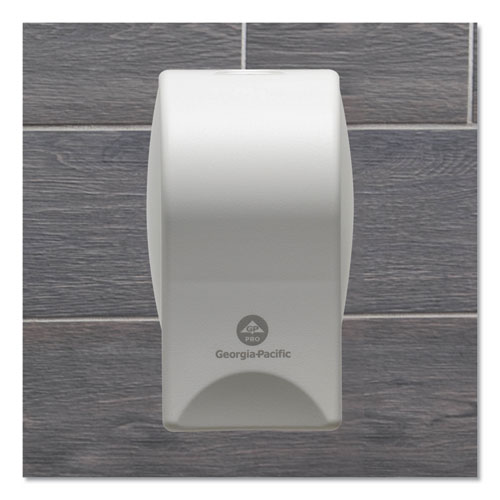
Products like the Georgia-Pacific ActiveAire line use a continuous, metered release system rather than a single spray, providing consistent odor neutralization over a full month rather than a temporary masking scent. Whole room powered dispensers add gentle air circulation that helps distribute the counteractant more evenly than a passive system.
Enzymatic and Bio Based Cleaners
Enzymatic cleaners use biological activity to actually break down the organic material causing odor, rather than simply masking it with fragrance. These products work well as a scheduled deep clean treatment for grout, fixture bases, and drain lines.
Urinal Screens and Deodorizer Blocks
A quality urinal screen serves two purposes. It reduces splash back that contributes to floor and grout odor, and many are treated with a deodorizing agent that adds a layer of odor control directly at the fixture.
Touch Free Hand Hygiene Dispensers
GoJo and PURELL touch free dispensers reduce cross contamination at the sink, which keeps counter areas cleaner and reduces the secondary soil buildup that contributes to overall restroom odor over time.
Building a Restroom Odor Control Schedule
Daily: Empty and service trash and feminine hygiene receptacles, wipe down fixture bases and grout adjacent surfaces, confirm dispensers are stocked and functioning.
Weekly: Pour water down low traffic floor drains, inspect exhaust fan operation, treat drain lines with an enzymatic maintainer in high use restrooms.
Monthly: Deep clean grout and fixture bases with an enzymatic cleaner formulated for uric acid breakdown, replace urinal screens and deodorizer blocks, check automated dispenser refill levels.
Seasonally: Increase drain line treatment and receptacle service frequency during peak summer heat and humidity, when bacterial growth and odor production both accelerate.
Common Mistakes Facility Managers Make
Relying on air freshener as the primary strategy. Masking odor without addressing the source means the problem returns as soon as the fragrance fades, often within hours.
Treating floor drains as maintenance free. Dry traps are one of the most common and most fixable sources of restroom odor, and a five minute pour of water solves the problem completely.
Skipping enzymatic deep cleaning. Daily surface cleaning does not reach urine residue absorbed into porous grout. A scheduled enzymatic treatment is necessary to address it at the source.
Under servicing trash during peak months. Summer heat accelerates odor production from waste receptacles significantly faster than a standard year round service schedule accounts for.
Frequently Asked Questions
What is the most common cause of persistent restroom odor?
Dry floor drain traps are one of the most common and most overlooked causes. When the water seal in a drain trap evaporates, sewer gas rises directly into the restroom, producing a persistent odor that air freshener cannot mask effectively.
How often should restroom drains be treated for odor control?
High use restrooms benefit from weekly enzymatic drain line treatment, while low traffic restrooms should have water poured down floor drains on a similar schedule to prevent trap evaporation.
Do enzymatic cleaners actually work better than standard disinfectants for odor?
Yes, for odor specifically. Enzymatic cleaners use biological activity to break down the organic material, including uric acid and biofilm, that produces odor at the source, while standard disinfectants primarily target surface pathogens without necessarily removing embedded odor causing residue.
Why does restroom odor get worse in summer?
Heat and humidity accelerate bacterial growth and organic decomposition, which speeds up odor production in drains, grout, and waste receptacles. Facilities often need to increase service frequency during peak summer months to keep pace.
What restroom products provide the longest lasting odor control?
Automated, metered dispensing systems like Georgia-Pacific ActiveAire provide more consistent odor neutralization over time compared to manual aerosol sprays, which only mask odor temporarily and require frequent reapplication.
Solving Restroom Odor at the Source
Persistent restroom odor is almost always solvable, but only when the actual source gets addressed instead of masked. Dry drain traps, urine residue in grout, biofilm buildup, and undersized ventilation all have specific, fixable solutions, and pairing those fixes with a consistent air freshening system closes the loop.
Q4 Industries has been helping Kansas City and Midwest facility managers solve restroom odor problems since 2003, with ISSA certified expertise and product lines from Georgia-Pacific, GoJo, and other trusted manufacturers built specifically for commercial restroom maintenance.
Ready to solve a persistent odor problem in your facility? Contact the Q4 Industries team to walk through your restrooms and build a plan that fixes it at the source.
Why Order Your Restroom Supplies From Q4 Industries
Q4 Industries has supplied restroom products to Kansas City metro and Midwest facilities since 2003, big enough to stock Georgia-Pacific, GoJo, and Bobrick at wholesale pricing and small enough to help you diagnose an odor problem instead of just selling you another air freshener. Our ISSA certified team can walk your restrooms and identify the actual source before recommending a fix.
Explore our Restroom & Tile Cleaners category or Restroom Partitions and Accessories for fixtures. Call 913-894-6240 or 800-815-0245, or reach out through our contact page to schedule a walkthrough.