Each year, more than 1.1 million workers nationwide suffer injuries that require missed workdays due to slip and fall accidents. According to the Centers for Disease Control and Prevention, that figure accounts for nearly 18% of all work-related injuries in the U.S. These incidents are not just painful for the people involved. They carry real financial weight for facilities through medical costs, lost productivity, liability exposure, and damage to team morale.
June is National Safety Month, and for facility managers, building service contractors, and operations leads, it is an important opportunity to go beyond awareness and take a hard look at what is actually happening on the floor.
Why Cleaning and Maintenance Are at the Root of Most Slip Hazards
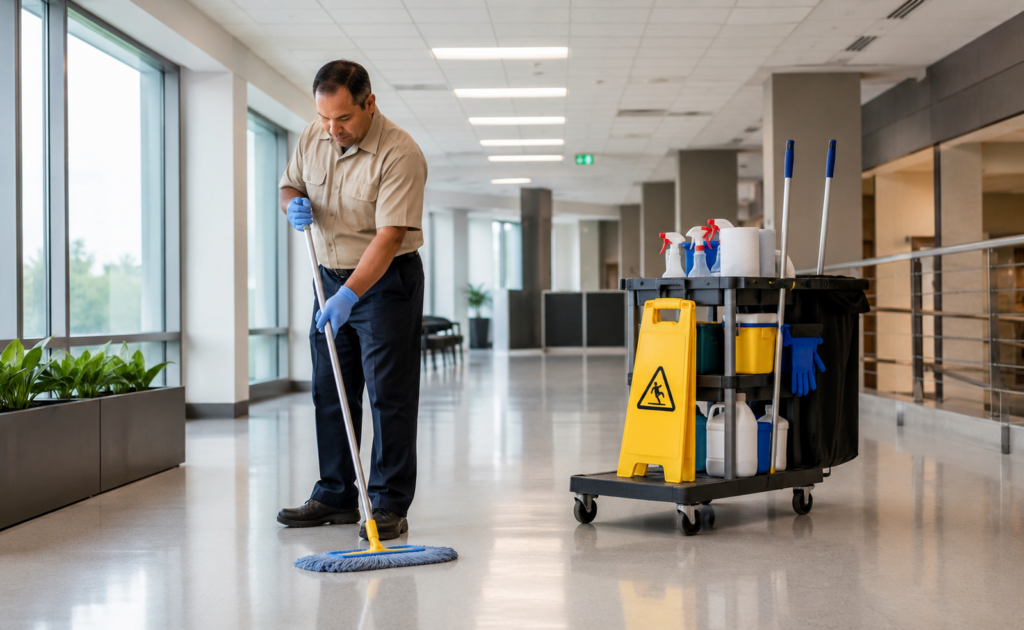
When people think about slip-and-fall prevention, they often focus on warning signs and wet-floor cones. Those matters are a reactive measure, not a preventive one. The root causes of most slip-and-fall incidents trace back to cleaning and maintenance practices that are inconsistent, poorly prepared, or simply not designed with safety in mind.
Improper chemical applications leave invisible residue that reduces traction. Floor care routines that skip high-traffic areas create uneven risk across a facility. Outdated equipment fails to remove moisture or contaminants effectively. Even well-intentioned custodial teams can create hazards without the right training, tools, or products.
The good news is that most of these risks are preventable with the right program in place.
Building a Floor Care Program That Actually Prevents Injuries
Evaluate Your Current Routine for Hidden Hazards
A floor care audit is the starting point. Walk through your facility with fresh eyes. Look for areas where moisture collects, where traffic patterns are heaviest, and where your team’s current routine may leave gaps. Pay close attention to entryways, restrooms, kitchens, loading docks, and hallways near exterior doors.
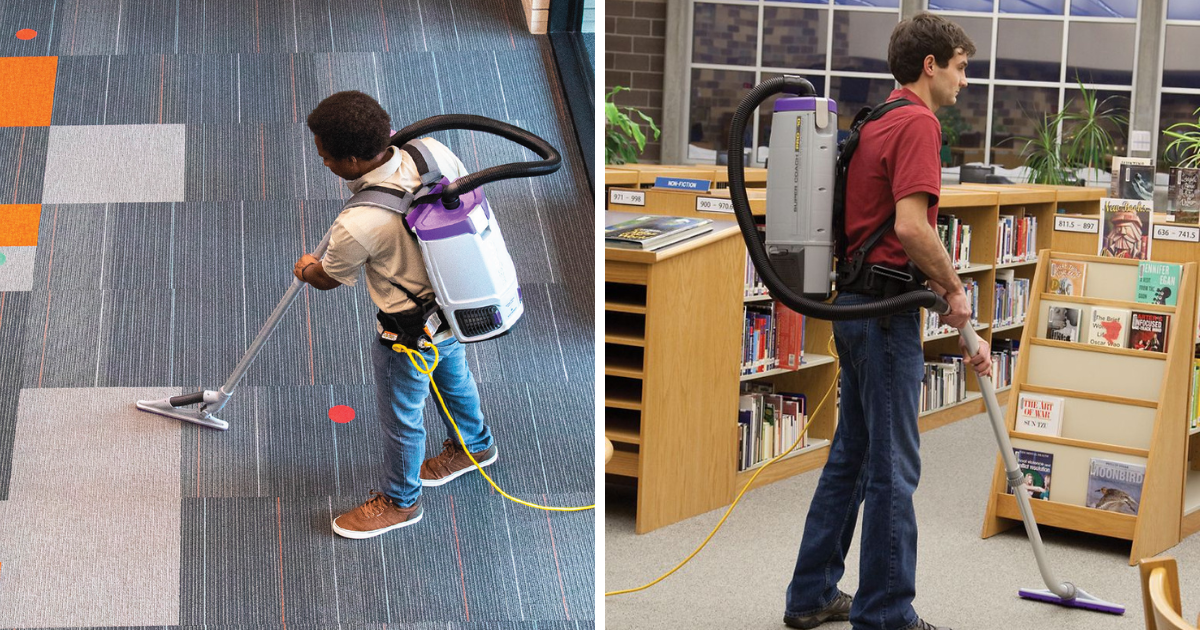
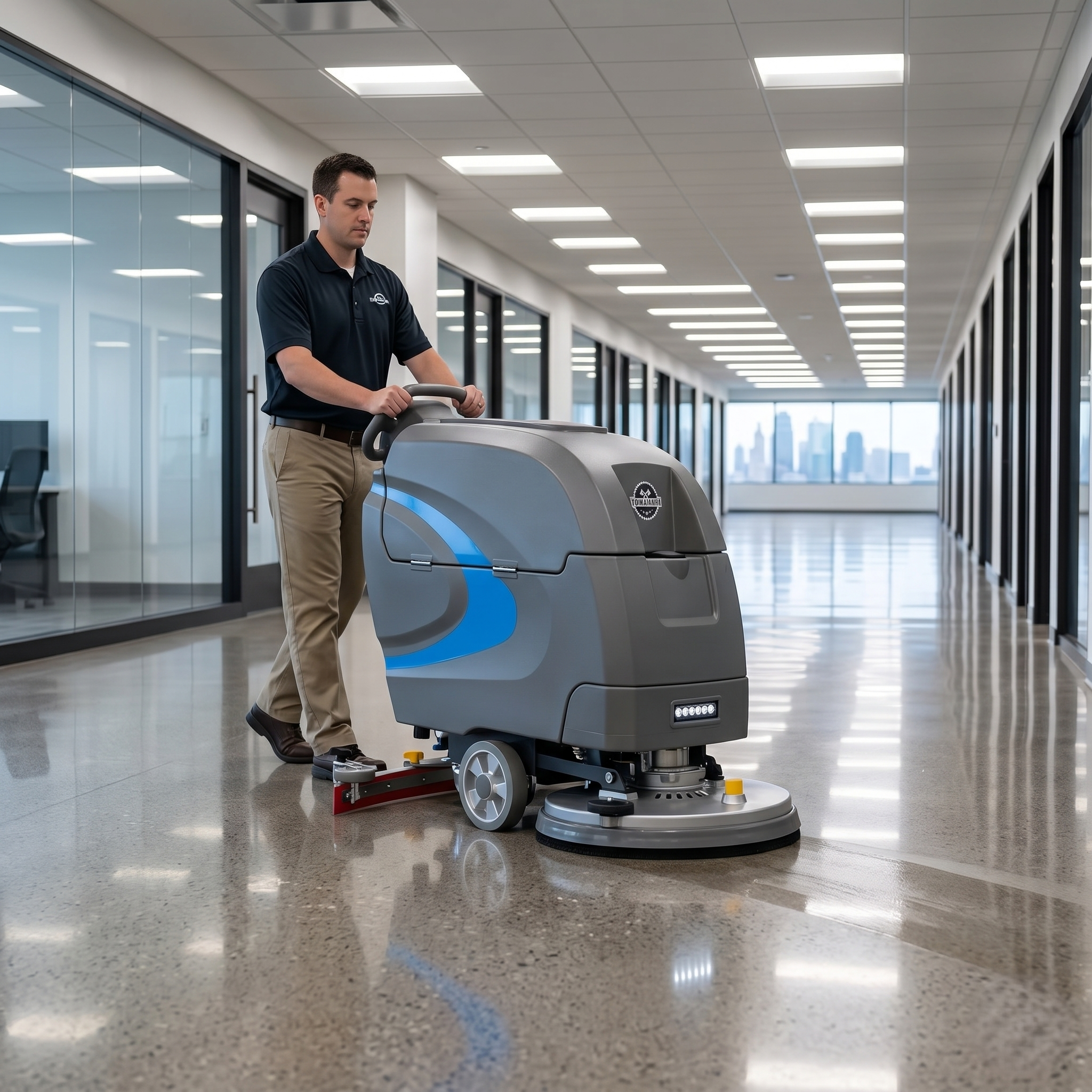
Ask whether your team has the right mop systems, floor machines, and drying equipment to handle each surface type in your facility. A routine that works on sealed concrete may not be appropriate for vinyl composition tile or polished terrazzo.
Use the Right Cleaning Chemicals and Dilution Rates
One of the most overlooked contributors to slip hazards is chemical misuse. Cleaning products that are too concentrated can leave a slick film on floors even after they appear dry. Products that are too diluted may fail to lift contaminants, leaving behind greasy or sticky residue.
Proper dilution control is not just a cost-saving measure. It is a safety standard. Facilities that use chemical dispensing systems and train staff on correct ratios dramatically reduce the risk of residue-related falls. Make sure storage and handling also comply with OSHA guidelines, and that Safety Data Sheets are accessible to your entire team.
Invest in the Right Matting Systems
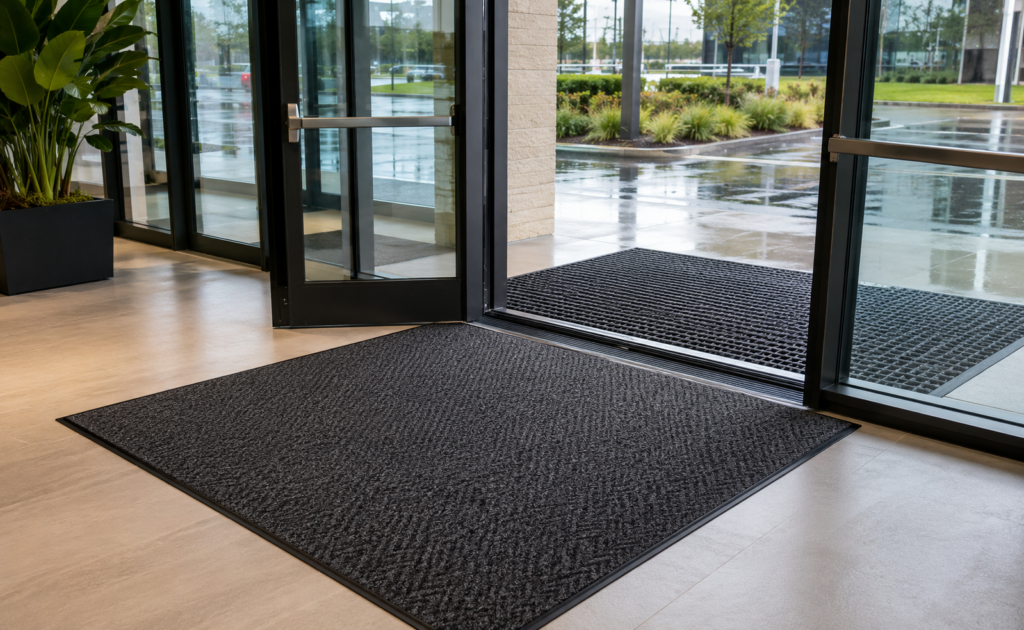
Entry matting is one of the highest-return investments a facility can make to prevent slips. A properly sized and placed matting system captures moisture, dirt, and debris before it reaches interior floors, reducing the spread of contaminants that cause slips.
The rule of thumb is that it takes approximately 10 to 15 feet of matting to remove most of the soil and moisture from shoes. Facilities that rely on a single small mat at the door are only addressing a fraction of the problem. Consider a three-zone approach: scraper mats outside, wiper mats at the transition, and absorbent interior mats in high-risk areas.
Keep Signage, PPE, and Spill Response Ready
Wet floor signs should be within arm’s reach of every custodial cart, not stored in a supply closet at the end of the hall. Spill kits need to be stocked and accessible in kitchens, break rooms, and near any area where liquids are used or stored.
Personal protective equipment for cleaning staff is also part of the equation. Slip-resistant footwear, gloves, and proper body mechanics all reduce the risk of injury for the people doing the work.
Train Your Team on Protocols That Go Beyond Surface Cleaning
Training is not a one-time event. Custodial staff turnover is common in many facilities, and safety protocols need to be reinforced regularly. Make sure your team understands not just how to clean, but why the sequence, products, and methods they use directly affect the safety of everyone in the building.
Documentation matters here as well. Written protocols, training logs, and inspection checklists help facilities demonstrate OSHA compliance and provide a record of due diligence in the event of an incident.
Common Mistakes Facilities Make With Slip and Fall Prevention
Relying only on reactive signage. Wet floor cones are a short-term fix, not a safety program. They signal that a hazard exists but do nothing to eliminate it.
Using the wrong products for the surface. Not all floor cleaners are created equal. Using a product designed for one floor type on another can leave residue, strip finish, or reduce traction in ways that are not immediately visible.
Skipping matting at secondary entrances. Facilities often mat their main entrance and forget about side doors, loading areas, and emergency exits that see regular foot traffic.
Neglecting equipment maintenance. A worn-out mop or a floor machine with a dull pad does not clean effectively. Poorly maintained equipment can redistribute moisture and contaminants rather than removing them.
Treating training as a one-time event. Safety protocols need reinforcement, especially after new hires join or seasons change. What works in summer may need adjustment when wet and icy conditions arrive.
Frequently Asked Questions About Facility Slip and Fall Prevention
What is the most common cause of slip and fall accidents in commercial facilities?
Moisture on hard floors is the leading cause. This includes water tracked in from outside, spills that are not cleaned promptly, and cleaning processes that leave floors wet without adequate drying time or ventilation.
How do I know if my cleaning chemicals are contributing to slip hazards?
If floors feel tacky or look hazy after cleaning, residue buildup may be reducing traction. A dilution audit and product review with your janitorial supply partner can help identify the issue and correct it.
What type of matting system works best for high-traffic entryways?
A multi-zone matting system is most effective. Scraper mats outside remove large debris, wiper mats at the threshold absorb moisture, and absorbent interior mats trap what remains. The total length should be at least 10 to 15 feet to be effective.
How often should floor care protocols be reviewed?
At a minimum, protocols should be reviewed annually and after any incident. Seasonal changes, new products, new staff, or changes in facility use are all triggers for a protocol review.
Does OSHA have specific requirements for slip-and-fall prevention in facilities?
OSHA’s General Duty Clause requires employers to maintain a workplace free of recognized hazards. While there is no single, specific slip-and-fall standard for all industries, regulations covering housekeeping, walking and working surfaces, and PPE all apply. Documented protocols and training records are essential for demonstrating compliance.
Make June the Month You Take Action
National Safety Month is a useful reminder, but facility safety is a year-round responsibility. The difference between a facility that manages slip-and-fall risk effectively and one that does not usually comes down to three things: the right products, the right protocols, and the right partner.
At Q4 Industries, we work with facility managers, building service contractors, and operations teams across the Kansas City metro and Midwest to build floor care programs that protect people and meet compliance standards. From cleaning chemicals and matting systems to equipment and staff training resources, we bring ISSA-certified expertise and local service to every account we support.
Contact our team today to schedule a facility safety review or program consultation. Let us help you make your facility safer starting this month.